

How Do You Prioritize Tasks to Achieve a Sustainable Work Schedule: Feeling overwhelmed by a never-ending stream of tasks? You’re not alone. In today’s fast-paced professional world, the ability to effectively prioritize tasks isn’t just a nice-to-have skill; it’s a fundamental requirement for achieving a sustainable work schedule and preventing burnout. But how do you prioritize tasks when everything seems urgent?
This article will equip you with the knowledge and actionable strategies to conquer your workload. We’ll delve into powerful task prioritization techniques, introduce you to effective methods for prioritizing tasks, and show you how to implement them to create a work rhythm that is both productive and sustainable. By the end of this post, you’ll have a clear roadmap to transform your chaotic to-do list into a well-managed system that fuels your success, not your stress.
The Foundation of Productivity: Understanding How to Prioritize Tasks
Before we dive into specific techniques, let’s establish why prioritization is so crucial. At its core, task prioritization is the process of identifying what needs to be done first and what can wait. It’s about making conscious decisions about where to allocate your valuable time and energy.
Without a clear system for prioritization, you risk:
- Wasted effort: Spending time on low-impact activities while critical tasks languish.
- Missed deadlines: Allowing urgent items to slip through the cracks.
- Increased stress and burnout: Feeling constantly behind and unable to catch up.
- Reduced quality of work: Rushing through tasks due to a lack of focus.
A sustainable work schedule is built on a foundation of smart prioritization. It allows you to maintain momentum, achieve your goals, and still have energy left for life outside of work.
Essential Task Prioritization Techniques
There are numerous task prioritization techniques, and the best approach often involves a combination of methods. Here are some of the most effective ones:
The Eisenhower Matrix: Urgent vs. Important
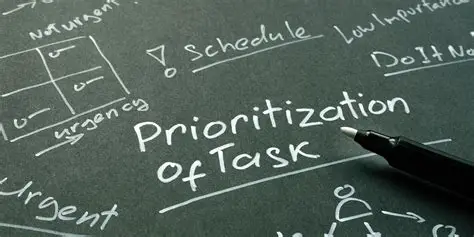
One of the most popular and effective task prioritization techniques is the Eisenhower Matrix, also known as the Urgent-Important Matrix. This tool helps you categorize tasks based on their urgency and importance, guiding you on how to handle each one.
The matrix divides tasks into four quadrants:
- Urgent and Important (Do First): These are critical tasks with tight deadlines that require immediate attention. Think of a crisis, a major project deadline, or an urgent client request.
- Important, but Not Urgent (Schedule): These tasks contribute to your long-term goals but don’t have an immediate deadline. This is where strategic planning, skill development, relationship building, and preventative measures fall. Proactively scheduling these is key to avoiding them becoming urgent later.
- Urgent, but Not Important (Delegate): These tasks demand immediate attention but don’t contribute significantly to your goals. Often, these are interruptions, some emails, or routine tasks that someone else could handle.
- Neither Urgent nor Important (Eliminate): These are time-wasters. Distractions, excessive social media browsing, or tasks that are no longer relevant fall into this category.
Applying the Eisenhower Matrix
To use this task prioritization matrix:
- List your tasks: Write down everything you need to do.
- Categorize each task: Assign each task to one of the four quadrants.
- Act accordingly:
- Do tasks in Quadrant 1 immediately.
- Schedule time for tasks in Quadrant 2.
- Delegate tasks in Quadrant 3.
- Eliminate tasks in Quadrant 4.
Read More – How Can You Identify Signs of Work Overload and Reclaim Your Personal Time?
The ABCDE Method: Assigning Value
A simpler, yet powerful, method is the ABCDE method. This involves assigning a letter to each task on your to-do list to indicate its priority level:
- A: Must do – Critical tasks with serious consequences if not completed. If you have multiple ‘A’ tasks, prioritize them A-1, A-2, A-3, etc.
- B: Should do – Important tasks with mild consequences if delayed. These are tasks you should do, but they aren’t as critical as ‘A’ tasks.
- C: Nice to do – Tasks with no real consequences if not done. These might be pleasant activities or tasks that would be beneficial but aren’t essential.
- D: Delegate – Tasks that can be handed off to someone else.
- E: Eliminate – Tasks that can be removed from your list altogether.
How to Implement ABCDE
This task prioritization technique is straightforward:
- Write down all your tasks for the day or week.
- Go through the list and assign A, B, C, D, or E to each item.
- Focus on completing your ‘A’ tasks first, then move to ‘B’ tasks, and so on. Never do a ‘B’ task when an ‘A’ task is unfinished.
Time Blocking: Scheduling Your Priorities
While not strictly a prioritization method itself, time blocking is an excellent companion to any task prioritization technique. It involves scheduling specific blocks of time in your calendar for particular tasks or types of work.
Benefits of Time Blocking:
- Dedication: Allocates focused time for important tasks.
- Prevents Procrastination: Clearly defines when a task will be worked on.
- Manages Interruptions: Helps you protect dedicated work periods.
- Realistic Planning: Forces you to estimate how long tasks will take.
How to Time Block:
- Identify your most important tasks (using methods like the Eisenhower Matrix or ABCDE).
- Estimate the time needed for each task.
- Open your calendar and block out specific times for these tasks, treating them like appointments.
- Be realistic and include buffer time for breaks and unexpected events.
The MoSCoW Method: For Projects and Teams
Originally developed for software development, the MoSCoW method is a fantastic way to prioritize features or tasks within a project, especially when working with a team.
- Must have: The highest priority. The project cannot succeed without these.
- Should have: Important, but not vital. The project can succeed without them, but they add significant value.
- Could have: Desirable, but not necessary. These are “nice-to-haves” that can be included if time and resources allow.
- Won’t have: These tasks are agreed upon as not being delivered in the current timeframe.
This method is particularly useful for ensuring alignment on what is truly essential for project success.
Building a Sustainable Work Schedule: Beyond Prioritization
Prioritization is key, but a sustainable work schedule involves more than just deciding what to do first. It requires a holistic approach to managing your time and energy.
1. Understand Your Energy Levels
Are you a morning lark or a night owl? Schedule your most demanding tasks during your peak energy hours. This simple adjustment can significantly boost your productivity and reduce the feeling of struggling through your day.
2. Batch Similar Tasks
Group similar tasks together and complete them in one go. For example, respond to emails during designated blocks, make all your phone calls consecutively, or process all your administrative work at once. This minimizes context switching and improves efficiency.
3. Learn to Say No
This is a crucial skill for maintaining a sustainable workload. Politely decline requests that don’t align with your priorities or that you genuinely don’t have the capacity for. Protect your time and energy.
4. Schedule Regular Breaks
Breaks are not a luxury; they are a necessity for sustained focus and preventing burnout. Use techniques like the Pomodoro Technique (25 minutes of work followed by a 5-minute break) to build in regular pauses.
5. Review and Adapt
Your workload and priorities will change. Regularly (daily or weekly) review your to-do list, your progress, and your schedule. Be flexible and adjust your plans as needed. What worked last week might need tweaking for this week.
6. Set Realistic Goals
Avoid overcommitting. Break down large tasks into smaller, manageable steps. Celebrate small wins along the way to maintain motivation.
Putting It All Together: Your Action Plan
So, how do you prioritize tasks to achieve a sustainable work schedule? It’s a continuous process of evaluation and action.
- Capture Everything: Start by writing down all your tasks, big and small.
- Choose Your Method(s): Select one or two task prioritization techniques that resonate with you (e.g., Eisenhower Matrix, ABCDE).
- Assign and Rank: Apply your chosen method to categorize and rank your tasks.
- Schedule Ruthlessly: Use time blocking to allocate specific times for your high-priority tasks.
- Work Smarter: Batch similar tasks, leverage your peak energy times, and minimize distractions.
- Protect Your Time: Learn to say no and delegate when appropriate.
- Rest and Recharge: Integrate regular breaks into your day.
- Reflect and Refine: Regularly review your system and make adjustments.
By implementing these methods for prioritizing tasks and integrating them into your daily routine, you can move from feeling overwhelmed to being in control. You’ll build a more efficient workflow, achieve your goals with less stress, and, most importantly, create a sustainable work schedule that allows you to thrive, both professionally and personally.
Start today by taking just 15 minutes to list your tasks and apply the Eisenhower Matrix. You might be surprised at how much clarity you gain!
Follow us on